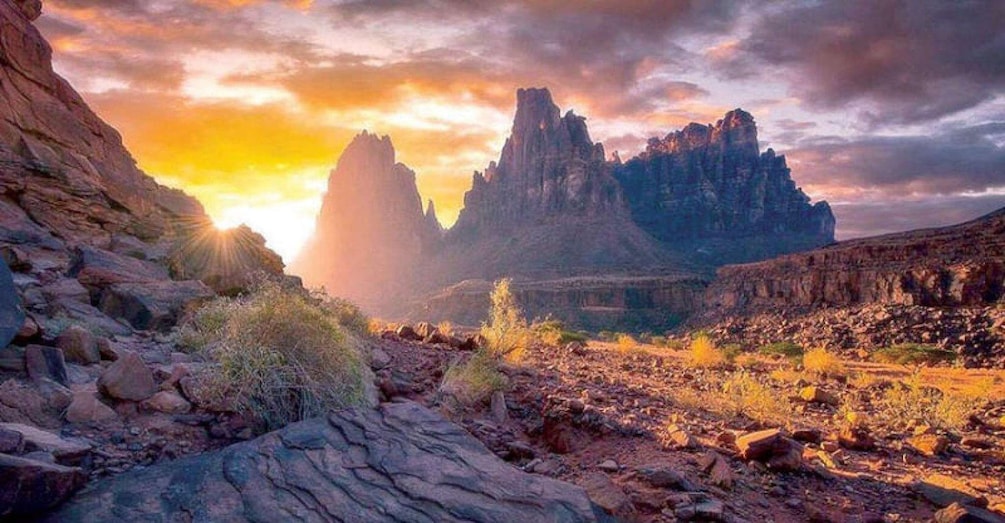
Begin your journey with a convenient pickup from your hotel or the airport in Tabuk. Your first destination is Al Shaq, often referred to as the Grand Canyon of Saudi Arabia and the Edge of NEOM. The word “Al Shaq” translates to “the tear,” a fitting name for this dramatic landscape where ancient tectonic activity split the earth apart, forming a massive canyon of steep rock faces and breathtaking cliffs near the village of Shiqry.
Step onto the natural rocky ledge extending over the canyon’s edge and take in the spectacular views of layered rock formations dropping far below, with endless desert scenery stretching to the horizon. Close by stands the iconic Lion Mountain, a remarkable rock formation shaped like a lion’s face when seen from the perfect angle. It has become one of the region’s most photographed landmarks and a signature sight of Tabuk.
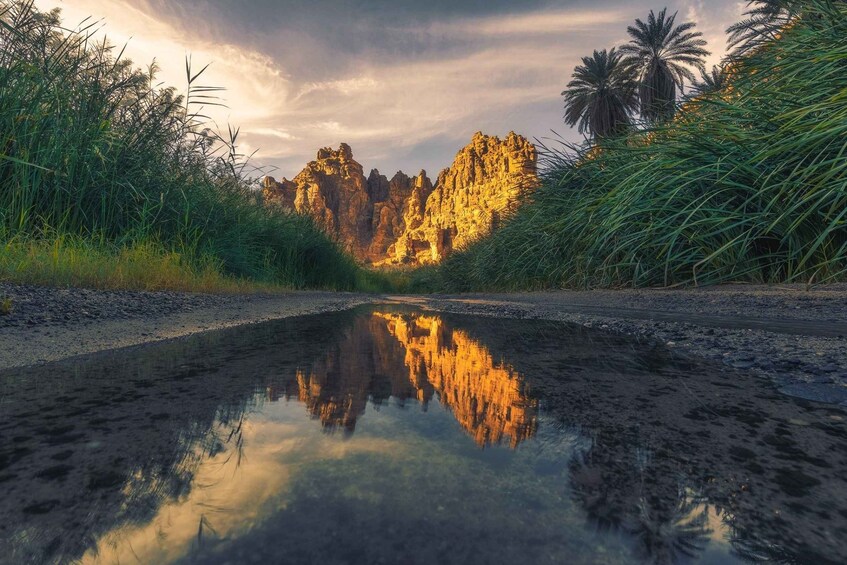
Leaving Al Shaq behind, continue with your guide towards Wadi Al Disah, a place of extraordinary natural beauty that truly must be experienced in person. Often called the Valley of the Palms, this magnificent canyon lies within the Prince Mohammed bin Salman Natural Reserve in the Tabuk highlands.
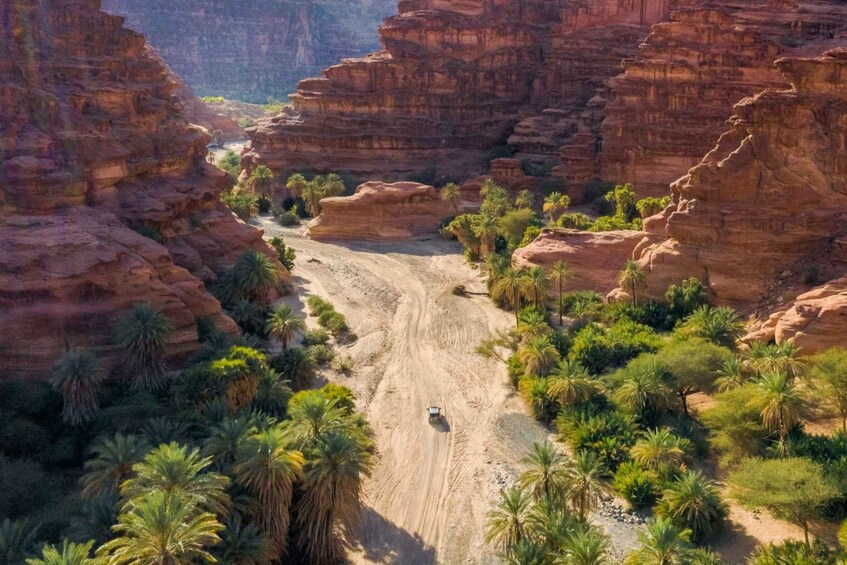
Marvel at the immense sandstone cliffs and towering rock pillars glowing in shades of amber, crimson, and rust, surrounding a vibrant valley nourished by year-round freshwater springs. These waters sustain flourishing date palm groves, wild plants, and desert vegetation, creating a striking green oasis amid the Arabian desert. The contrast between the rugged cliffs above and the lush valley below creates an unforgettable landscape.
Enjoy lunch at a traditional farm located deep within the valley, where you will experience authentic Saudi hospitality and freshly prepared home-style dishes in a peaceful rural setting rarely seen by most travellers. Following lunch, climb aboard a vintage open-top four-wheel-drive vehicle for a safari through the heart of the wadi. Ride beneath soaring canyon walls and through rows of palms as your guide introduces you to the freshwater springs, local wildlife, and ancient Nabataean carvings etched into the canyon rock — historical inscriptions and tomb facades dating back thousands of years to the same civilisation that famously built Petra in Jordan.