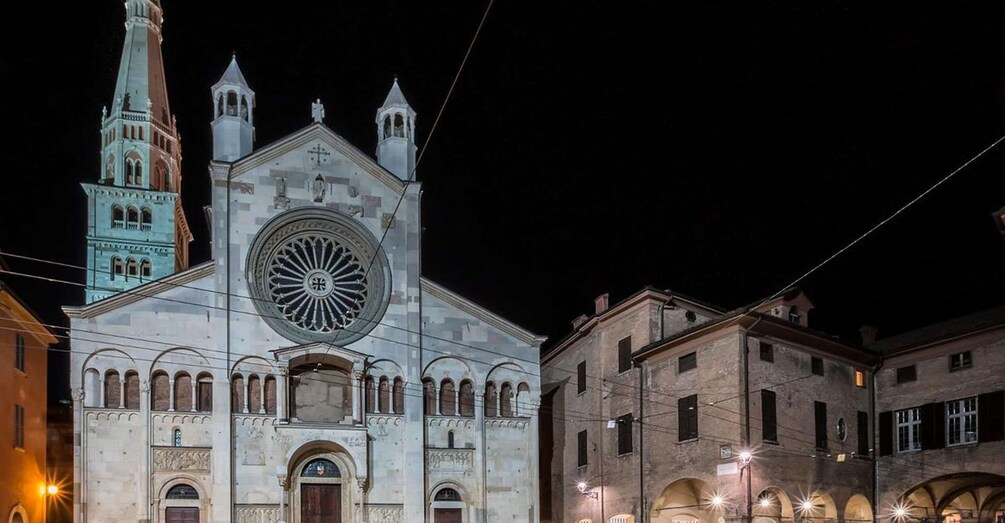
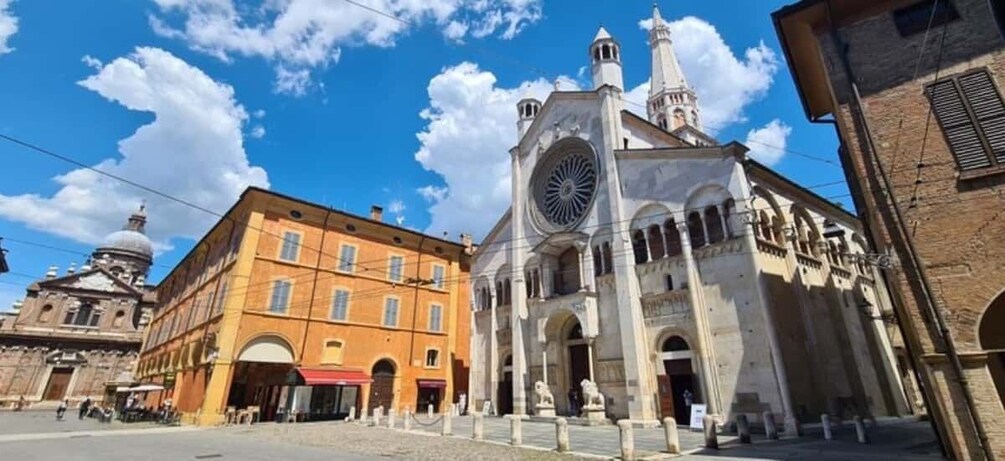
9 June 1099: The foundation stone of the Cathedral is laid, and just seven years later, in the presence of Matilda of Canossa and Pope Paschal II, the body of the patron saint, Saint Geminianus, will be transferred there.
We will explore this magnificent example of Romanesque architecture, which, together with the Ghirlandina and the square, has been a UNESCO World Heritage Site since 1997. We will be able to admire the sculptures of the great Wiligelmo, who depicts the stories of Genesis on the façade, the Main Portal with the stylophore lions from the Roman necropolis, the Fish Market Gate with the tales of King Arthur, and the
magnificent Regia di Piazza, made of precious Verona marble. Inside, numerous masterpieces will catch our eye: the Nativity Scene with statuettes by Antonio Begarelli, which here attains a Raphaelesque grace; the Altarpiece of Saint Sebastian by Dosso Dossi, one of his greatest works; the crypt, which, among its forest of columns, houses the remains of the patron saint and the Madonna della Pappa, a domestic scene by Guido Mazzoni; the presbytery with the precious inlaid choir by the Lendinara family and the Altarpiece of the Statuettes, a magnificent terracotta polyptych by the master Michele da Firenze.
The route will aim to help you discover every detail of the cathedral, which, thanks to its beauty, has become an example and model of Romanesque architecture in all art history textbooks.
We will visit the Modena Cathedral, both inside and outside