Meet an English-speaking guide at the meeting point, Jinja Post Office, and receive a briefing on the tour highlights. Start the tour with a visit to learn how post offices were introduced in Uganda during the colonial era as a means of overseas communication.
Move to next destination at the Innovation Centre along the Jinja Main Street that was put to enhance youth innovative activities of hand made crafts and tailoring skills.It is a one stop point to buy and support the work of women and youth of souvenirs.
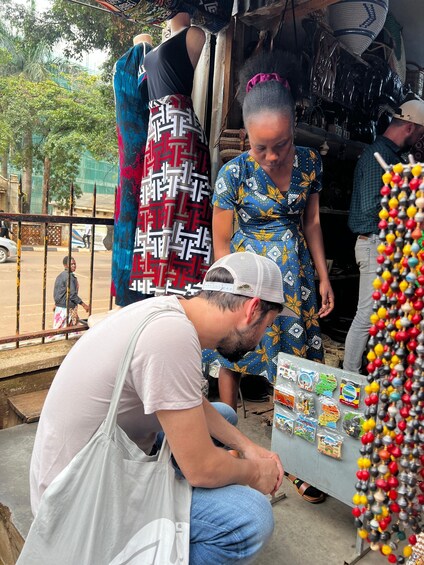
Continue your walk to the next destination that is the craft market also located along Jinja Main Street to buy some souvenirs.The prices are negotiable during shopping to buy stuff like a local and get a good Ugandan price depending on your bargaining power.
Next stop is the source cafe one of the oldest cafes in Jinja town for those who would like to take a break for some coffee.
Proceed to Amber house currently a restaurant but it was a hangout place for the British in colonial time and later on Idi Amin used it as his hangout place whenever he was in Jinja.It is one of the oldest buildings in Jinja town.
Next, visit Madhvani House, another old building in Jinja. It contained an apartment as well as offices of the Madhvani Group of Companies, an Asian company involved in coffee, cotton, and sugar during the colonial era.
Continue the walk and have a glimpse at the Jinja police station building which is another old building in Jinja town.
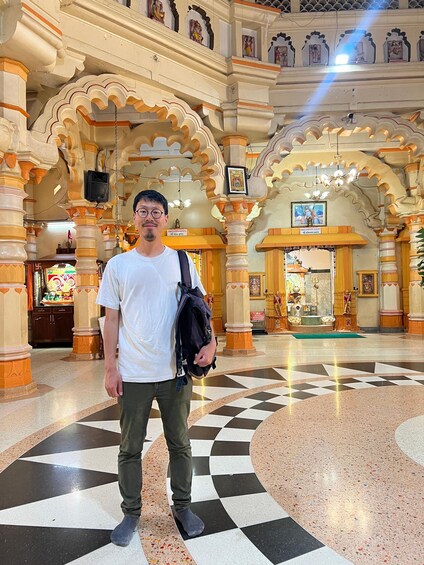
Visit at the Hindu temple in Jinja town a faith that was introduced by the Asians who moved with the British in construction of Railways.
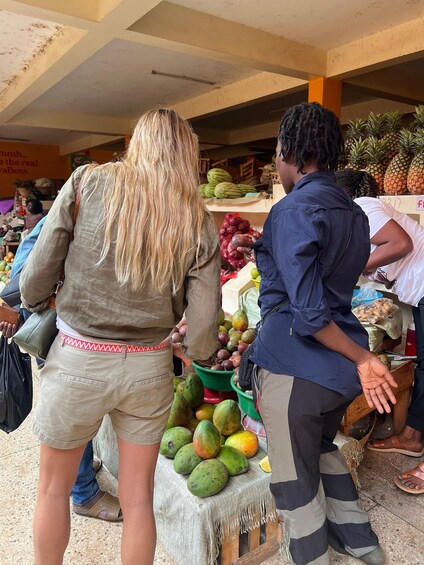
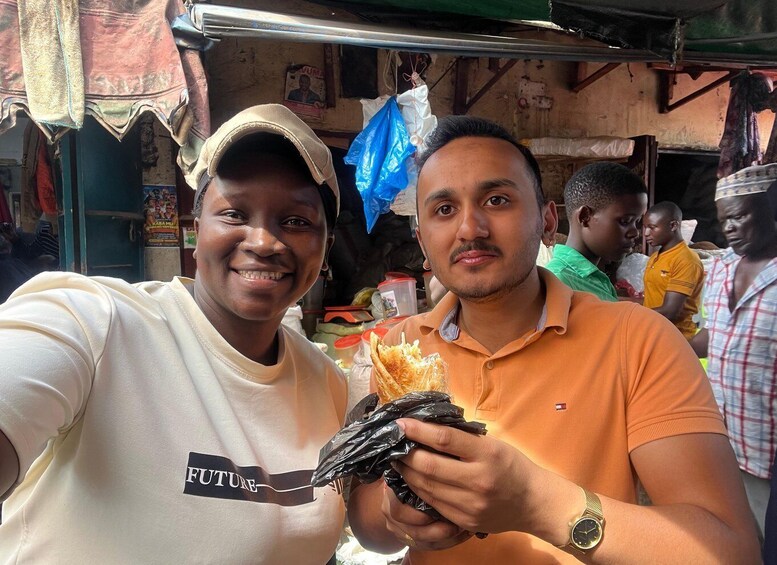
Proceed to Jinja central market the biggest market in Jinja town.It is a modern building constructed by the Ugandan Government to accommodate street vendors who used to sell commodities and second-hand clothes from along the Main Street.For those visitors who would like to buy some groceries and taste some of the local fruits is highly recommended.
Next stop is the Jinja taxi park for public transport to see how people move from Jinja town to other destinations across Uganda.
Next visit is the World war 2 Cemetery where most of the British people were buried.
The endpoint is Jinja Port, where goods were transported overseas by ship. As an industrial town close to Lake Victoria, Jinja was a trade hub for landlocked Uganda. Because the port is close to the River Nile, interested visitors can choose to take a boat cruise to the source of the Nile. and a community of walk.