Begin your journey with the Moon and planets, if they’re visible that night. On the Moon, adjust magnification to zoom in on craters and ridges. On Saturn, see the majestic rings, giving a real 3D effect. On Jupiter, observe cloud belts and its four largest moons: Io, Europa, Callisto, and Ganymede.
As it gets darker, more and more stars appear in the sky. Aim at bright stars, revealing their different colours and exploring questions like: What are stars made of? How do they produce energy? What is stellar evolution — from sun-like stars to white dwarfs, red giants, and super giants that one day will explode as supernovas.
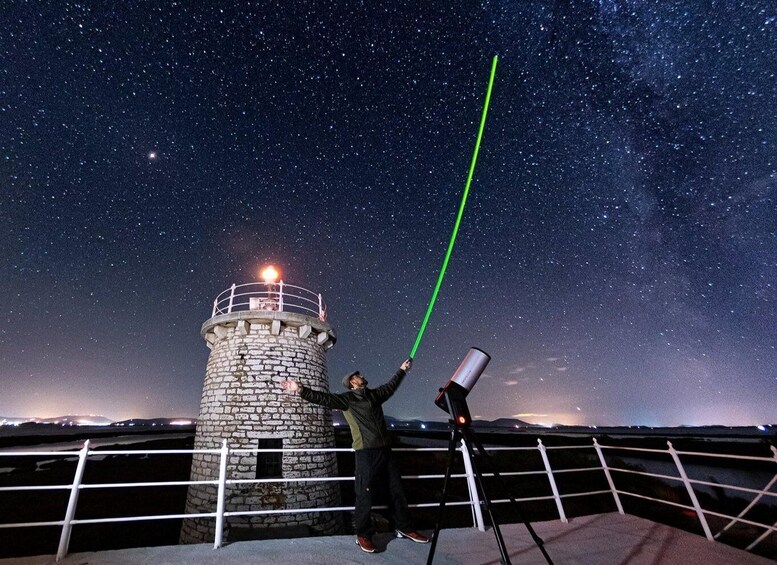
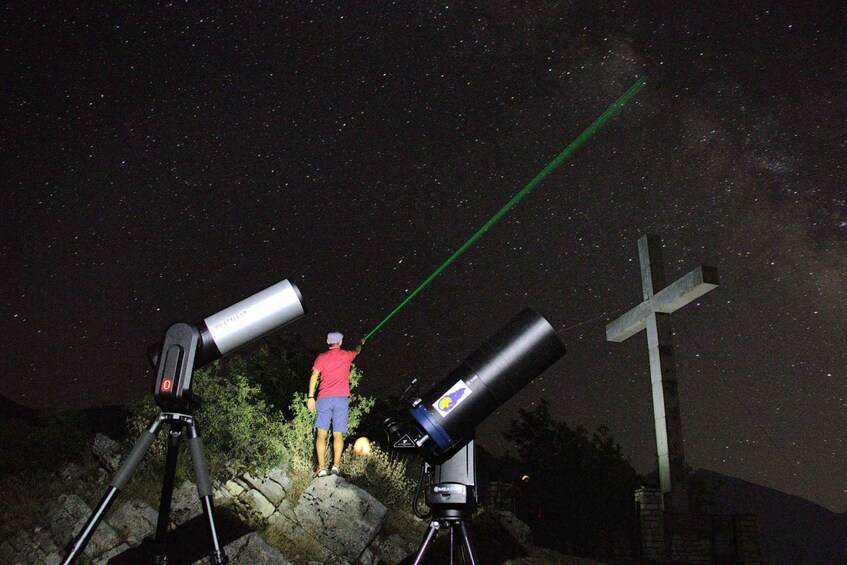
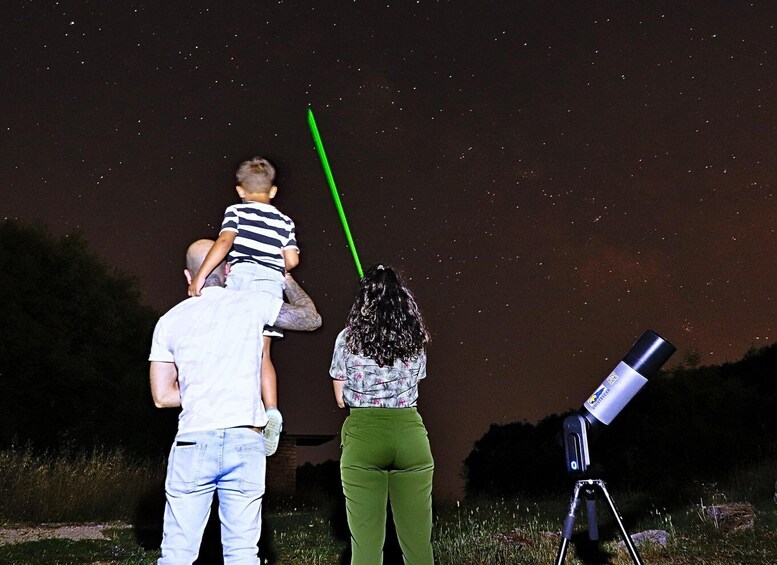
Enjoy a green laser constellation tour. Be guided through the night sky, pointing out bright constellations and learning how to find Polaris, the North Star. Bring the constellations to life through the myths of ancient Greece and hear how different cultures around the world have seen and named the stars in their own unique ways. Some constellation names may even be among the oldest surviving traces of human civilisation.
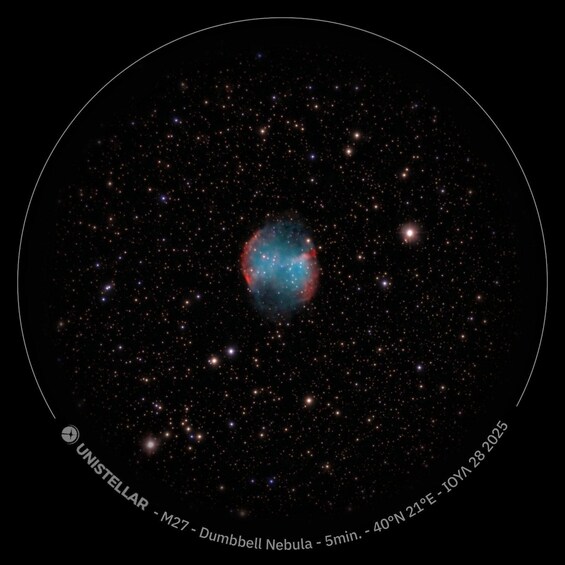
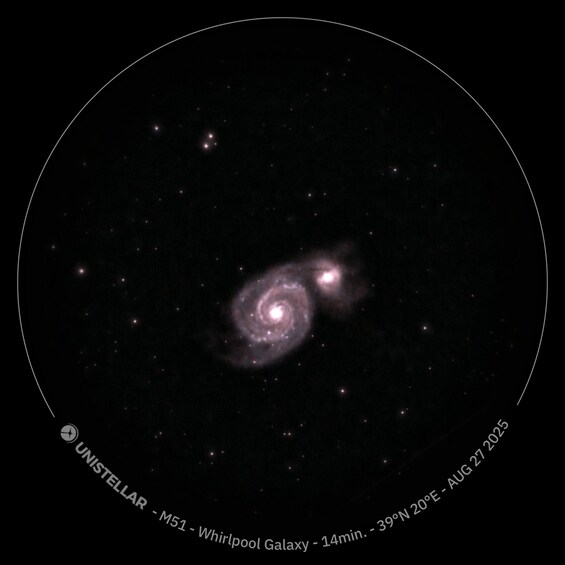
While sharing the science and stories of the night sky, start your deep sky tour with a planetary nebula, the death remnant of a Sun-like star. Then, point the telescopes at a variety of targets: star clusters, nebulae, other distant galaxies, some even colliding, each containing hundreds of billions of stars.
Ask all your astronomy questions and request specific deep-sky targets, observed through high-powered optics.