Nestled on the Longshou Plateau in northern Xi'an, the Daming Palace National Heritage Park stands as one of the most significant archaeological sites in China. It preserves the ruins of the Daming Palace, the grandest imperial palace complex of the Tang Dynasty (618–907 AD) and the political heart of the empire for over two centuries.
The palace was first constructed in 634 AD as the Yong'an Palace for Emperor Taizong's father. After a pause, it was revived and renamed in 662 AD under Emperor Gaozong, who moved the central government here. Over the following decades, 17 Tang emperors resided and governed from this magnificent complex, shaping the destiny of the empire and influencing all of East Asia.
In its prime, the Daming Palace was unparalleled in scale and splendour. Covering approximately 3.2 square kilometres, it was four and a half times larger than Beijing's Forbidden City and roughly the size of New York's Central Park. The palace was a powerful national symbol of Tang prosperity and a sacred destination along the Silk Road for envoys, merchants, and monks from distant lands. Its innovative design profoundly influenced royal architecture across East Asia, including the layouts of Japan's ancient capitals, Nara and Kyoto.
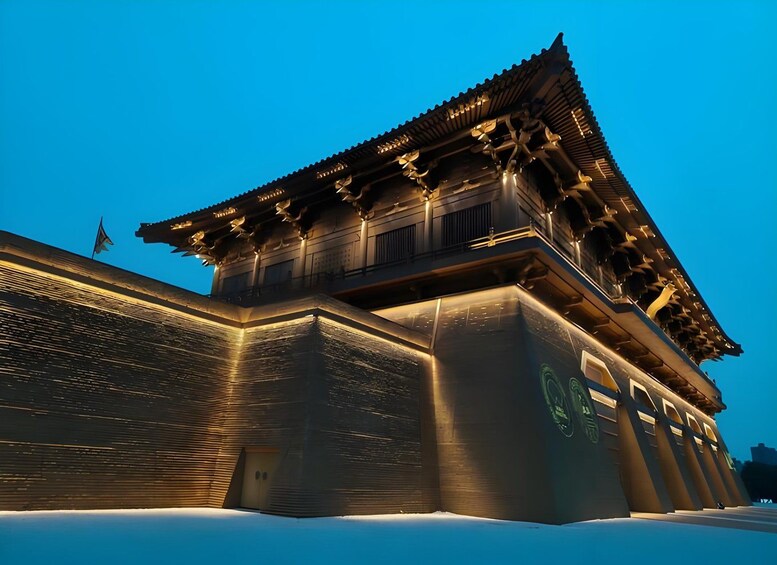
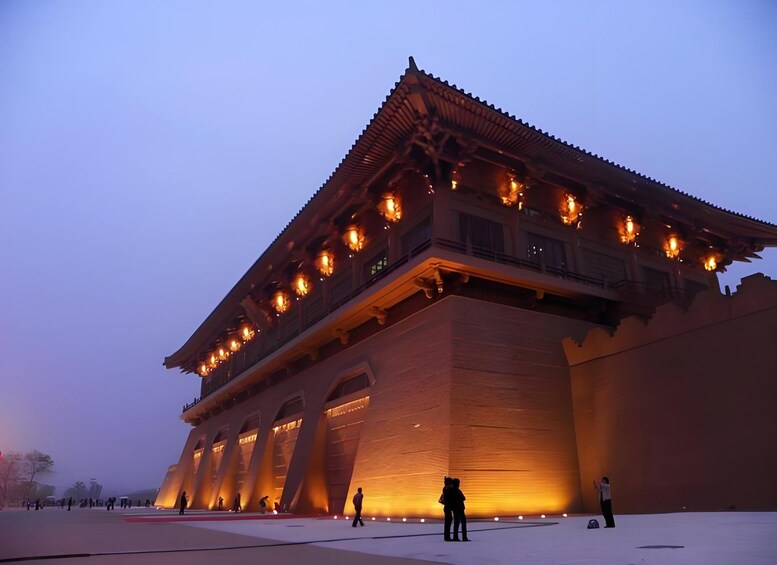
The archaeological remains are remarkably well-preserved, comprising 11 documented gates and over 40 palace foundations. The main axis ran from the grand Danfeng Gate in the south, northward to the colossal Hanyuan Hall, where emperors held major state ceremonies and received foreign tributary envoys. To the north lay the serene Taiye Lake, an artificial body of water that provided a tranquil retreat for the imperial family, surrounded by numerous pavilions and residential quarters.
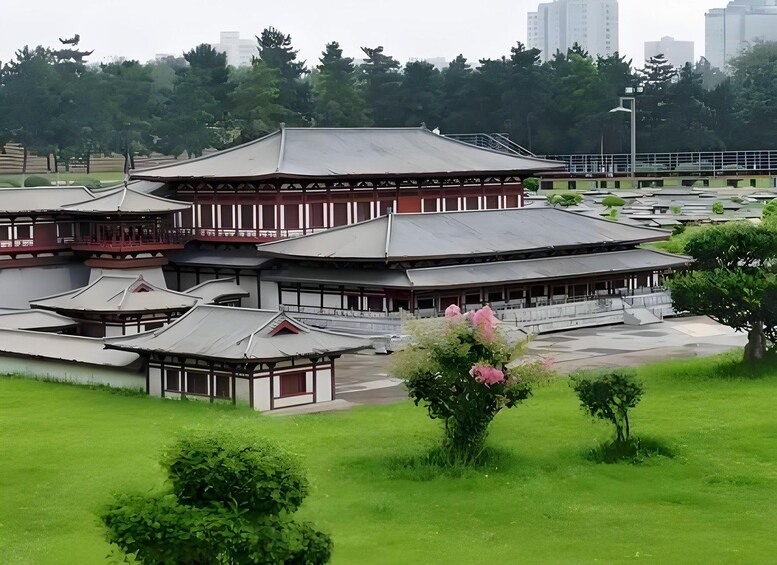
In 2014, the site was inscribed as a UNESCO World Heritage Site as part of the “Silk Roads: the Routes Network of Chang'an-Tianshan Corridor.” The heritage park opened to the public in October 2010, masterfully blending archaeological preservation with a vast public green space. Visitors can walk along ancient imperial avenues, view reconstructed hall outlines, and explore on-site museum exhibits. It offers an unforgettable journey back to the glorious Tang era, when Chang'an was truly the centre of the civilised world.